
Honestly? I never thought I’d have to write an article explaining what fufu is. Growing up in Cameroon, that question doesn’t exist — this dish is so present in every household that kids are actually a little tired of it. “Not this again, mom…” You know how it is.
But here in the diaspora, I quickly realized that so many people have never even heard of it. And honestly, that made me want to sit down and share a little piece of our culture with you. So here we are.
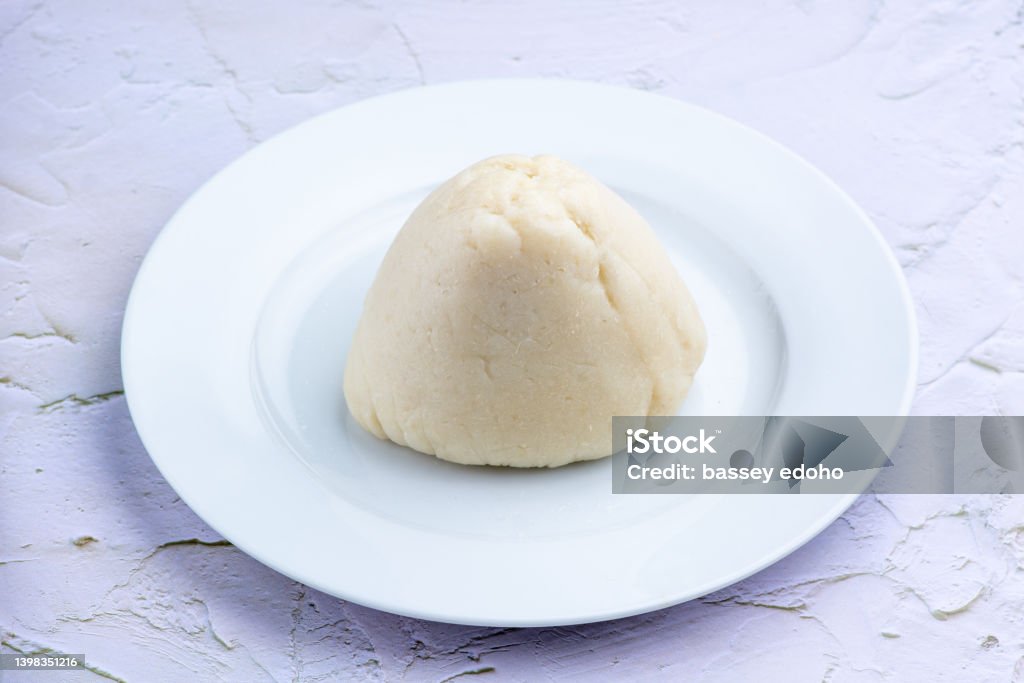
Fufu is a traditional dish found across many African countries. It’s made either by pounding boiled starchy vegetables like cassava or plantain, or by cooking corn or starchy vegetable flour in hot water until it forms a smooth, thick dough.
In this guide, we’re going to cover everything — nutrition, calories, whether it’s healthy, and how to eat it in a balanced way. Let’s get into it.
What is fufu called in English? There’s no direct translation. In English-speaking African countries, it’s often called “swallow” — because you swallow it whole rather than chewing. You’ll also find it spelled foufou, foofoo or foo foo depending on the country. Not to be confused with ugali (East Africa) or banku (Ghana) — related but different dishes.
What Is Fufu Made Of?
This dish doesn’t really have one standard recipe — it varies a lot depending on the country and region.
- In Cameroon for example, we tend to cook corn flour or cassava flour in hot water to make a thick couscous-style dough. You’ll also find macabo (taro) versions, which have a denser, heavier texture.
- In Côte d’Ivoire, the method is different — they boil and pound. They make foutou, which is pounded plantain mixed with cassava, and sometimes pounded plantain only. Both versions are smooth and elastic.
- Ghana is similar to Côte d’Ivoire in many ways, but Ghanaians also tend to ferment their cassava flour before cooking, which gives it a slightly sour taste.
- In Nigeria, pounded yam is king — it’s considered a delicacy, smoother and more elastic than most other versions.
What Does Fufu Taste Like?
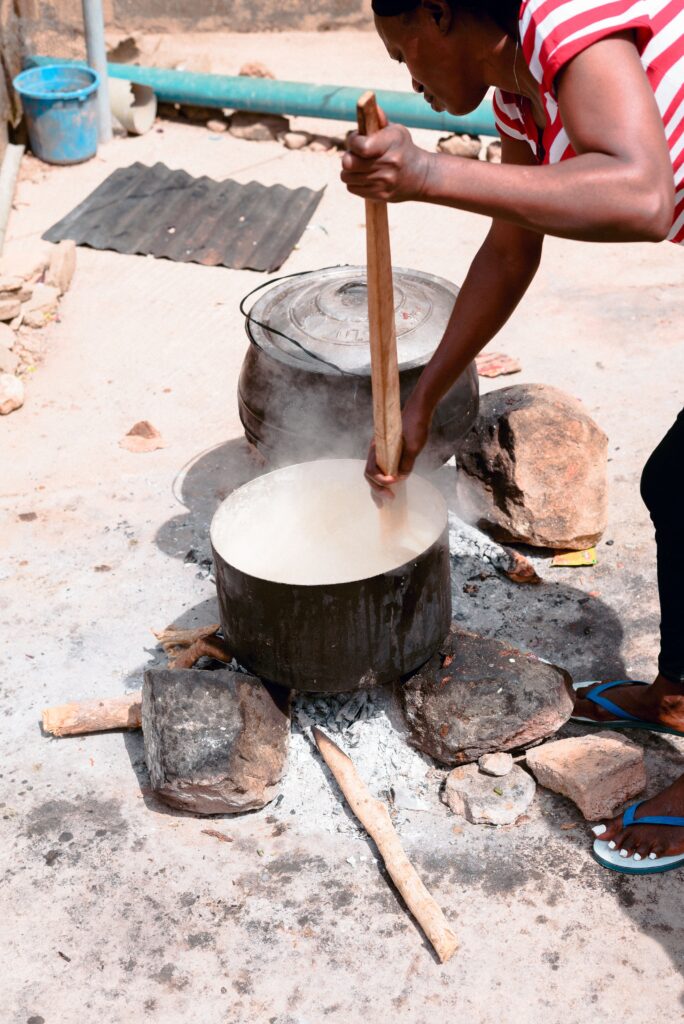
Honestly — you’d have to try it yourself to really know. But I’ll warn you: the taste changes completely depending on the starchy base and the cooking method.
Foutou made with plantain? Slightly sweet. Cassava couscous? A little sour and tangy. Pounded yam? Smooth and almost buttery.
But the texture is almost always the same across all versions: dense, elastic, slightly sticky — you tear it, roll it, and dip it.
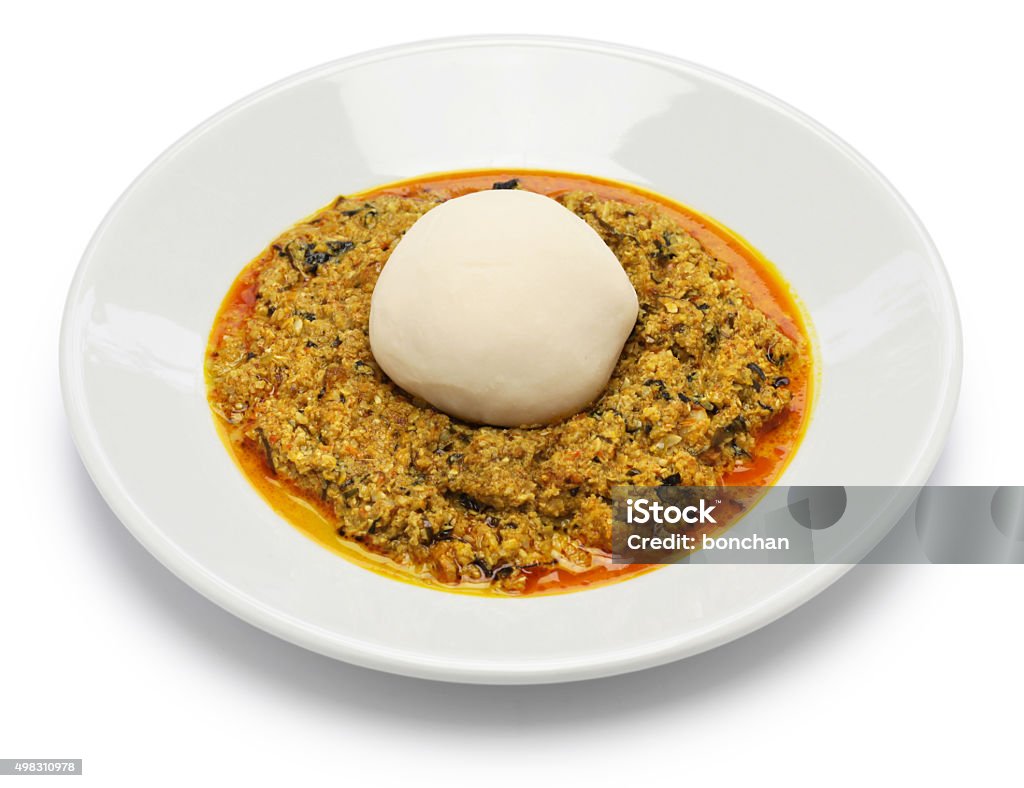
And here’s the thing — it’s never eaten alone. It always comes with a traditional local sauce or soup, and together? It’s just so good.
One more thing before you try it — it’s eaten with your hands, not with utensils. No fork, no spoon. You tear a small piece, roll it between your fingers, dip it in the sauce and swallow. Trust me, it tastes so much better that way.
What Do You Eat Fufu With?
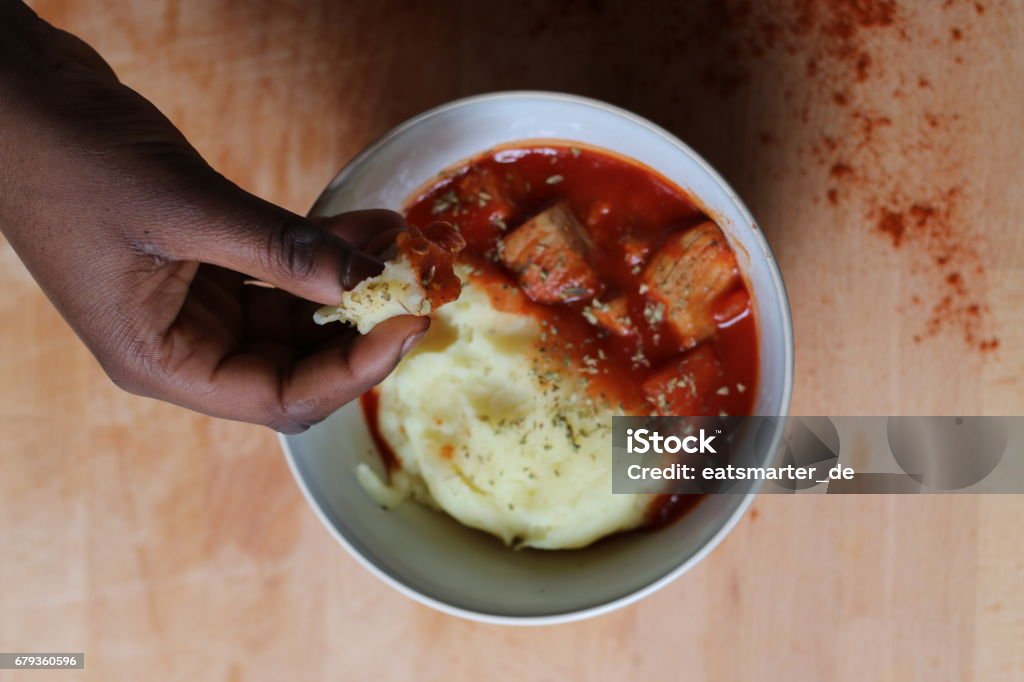
It’s never eaten alone — it always comes with a sauce or soup, and that combination is everything.
Back home in Cameroon, the corn version is super popular and it goes with several traditional sauces — okra sauce, and many other local favorites. Cassava couscous is usually paired with peanut (pistache) sauce, which is rich, creamy and honestly one of my favorites.
In Ghana and Côte d’Ivoire, you have the famous foutou with clear soup — light, peppery and so comforting. And in Nigeria? The egusi soup combination is iconic. It’s one of the most popular pairings in West African cuisine and honestly if you haven’t tried it, you’re missing out.
Fufu Nutrition Facts — Calories, Carbs & More
Let’s talk numbers. Here are the approximate nutrition facts for 1 cup (200g) of cooked cassava fufu:
| Nutrient | Amount |
|---|---|
| Calories | ~330 kcal |
| Carbohydrates | ~78g |
| Protein | ~1–2g |
| Fat | ~0.5g |
| Fiber | ~2g |
| Sugar | ~2g |
Note: Values vary depending on the base ingredient. The plantain version is slightly higher in potassium. Pounded yam is similar in carbs but slightly more nutritious overall.
Key takeaways:
- Very high in carbohydrates — it’s essentially pure starch
- Low in protein and very low in fat
- Provides minimal fiber
- High glycemic index, meaning it can raise blood sugar quickly
The nutritional value of the full meal depends almost entirely on what it’s paired with. A bowl of egusi soup loaded with spinach, fish and a little palm oil completely changes the nutritional profile of the plate.
Is Fufu Healthy?
Yes — and I’ll tell you why.
Think about it: what’s wrong with pounding a starchy vegetable and eating it? Nothing. In its traditional form, this is actually one of the most natural, unprocessed foods you can find. No additives, no preservatives — just real ingredients.
The real question is never about whether it’s healthy — it’s always about portion control. If you’ve read my previous article on how to build a balanced plate, you already know that carbs should take up about a quarter of your plate. Same rule applies here. Eat a reasonable portion, pair it with a good sauce packed with protein and vegetables — and there’s absolutely nothing to worry about.
The problem isn’t the dish itself. The problem is when we eat it in huge portions with nothing else to balance it out. That’s not a fufu problem — that’s a plate-building problem.
Is Fufu Good for Weight Loss?
If you’re trying to lose weight, my advice is simple: watch your carb portions and vary your diet. As long as you don’t forget your protein and vegetables on that plate, you can absolutely keep this dish in your life and still reach your weight loss goals.
No need to cut it out completely. Just be mindful of how much you’re eating.
How to Eat Fufu the Healthy Way
My practical advice? Focus on your sauce.
Choose vegetable-based sauces — and trust me, African cuisine has so many of them. Egusi soup? Load it up with extra spinach. Okra sauce is already made from vegetables. Bitterleaf soup is made with sweet potato leaves. There are so many options.
A good sauce, a little oil, some smoked fish or grilled protein — and you’re good. That’s really all there is to it.
A few more practical tips:
1. Control your portion A healthy portion is roughly the size of a tennis ball (about 100–120g cooked). Most restaurant servings are 2 to 3 times that. Start with less than you think you need.
2. Make the sauce the star Load your soup with leafy greens (spinach, bitter leaf), lean proteins (grilled fish, chicken, beans) and go easy on the palm oil. The sauce should fill most of your bowl.
3. Add more vegetables Vegetables add fiber, vitamins and volume — everything that helps you feel full with fewer calories.
4. Choose lean proteins Grilled fish, smoked turkey, chicken or beans bring the protein that this dish itself lacks.
5. Watch the oil Traditional soups can be very rich in palm oil. Cook at home with a measured amount — palm oil is nutritious in small quantities but high in calories in large ones.
6. Don’t eat it every day 2 to 3 times a week maximum if you’re watching your calories or blood sugar.
Healthier Alternatives to Fufu
If you’re looking to reduce carbs while keeping the soup ritual alive, two alternatives that actually exist:
- Cauliflower fufu — steamed and blended until smooth, mild flavor
- Cabbage fufu — very low carb, high in fiber
Frequently Asked Questions
What is fufu called in English? It’s often called “swallow” in English-speaking West Africa — because it’s swallowed whole, not chewed. Outside Africa it’s simply called fufu, foufou or foo foo.
What is fufu made of? It’s made from starchy vegetables — most commonly cassava, plantain, yam or cocoyam. These are either boiled and pounded or cooked as flour in hot water until smooth.
Is fufu healthy? Yes — it’s a natural, unprocessed food. The key is portion control and what you pair it with. A reasonable portion with a vegetable-rich sauce makes a perfectly balanced meal.
What do you eat fufu with? Always with a soup or sauce — egusi, okra, peanut sauce, bitterleaf or clear soup. The sauce is where all the nutrition and flavor comes from.
Is fufu high in carbs? Yes. A typical serving contains around 60–80g of carbohydrates. This is why portion size matters, especially if you’re managing blood sugar or trying to lose weight.
Is fufu good for weight loss? It can be, as long as you control your portions and balance your plate with protein and vegetables. No need to cut it out — just be mindful of how much you’re eating.
More Healthy African Food Guides
- [Low-Carb African Foods] — traditional dishes reimagined for lower carb intake
- [African Protein Sources] — the best proteins in West and Central African cuisine
- [How to Build a Balanced African Plate] — the simple method I use every day
- [What Is Egusi? Nutrition & Health Benefits] — the superfood seed hiding in your soup
Thank you so much for reading all the way to the end! If you found this helpful, save this post on Pinterest so you can come back to it later. 📌
This article is for informational purposes. Always consult a registered dietitian for personalized nutrition advice.