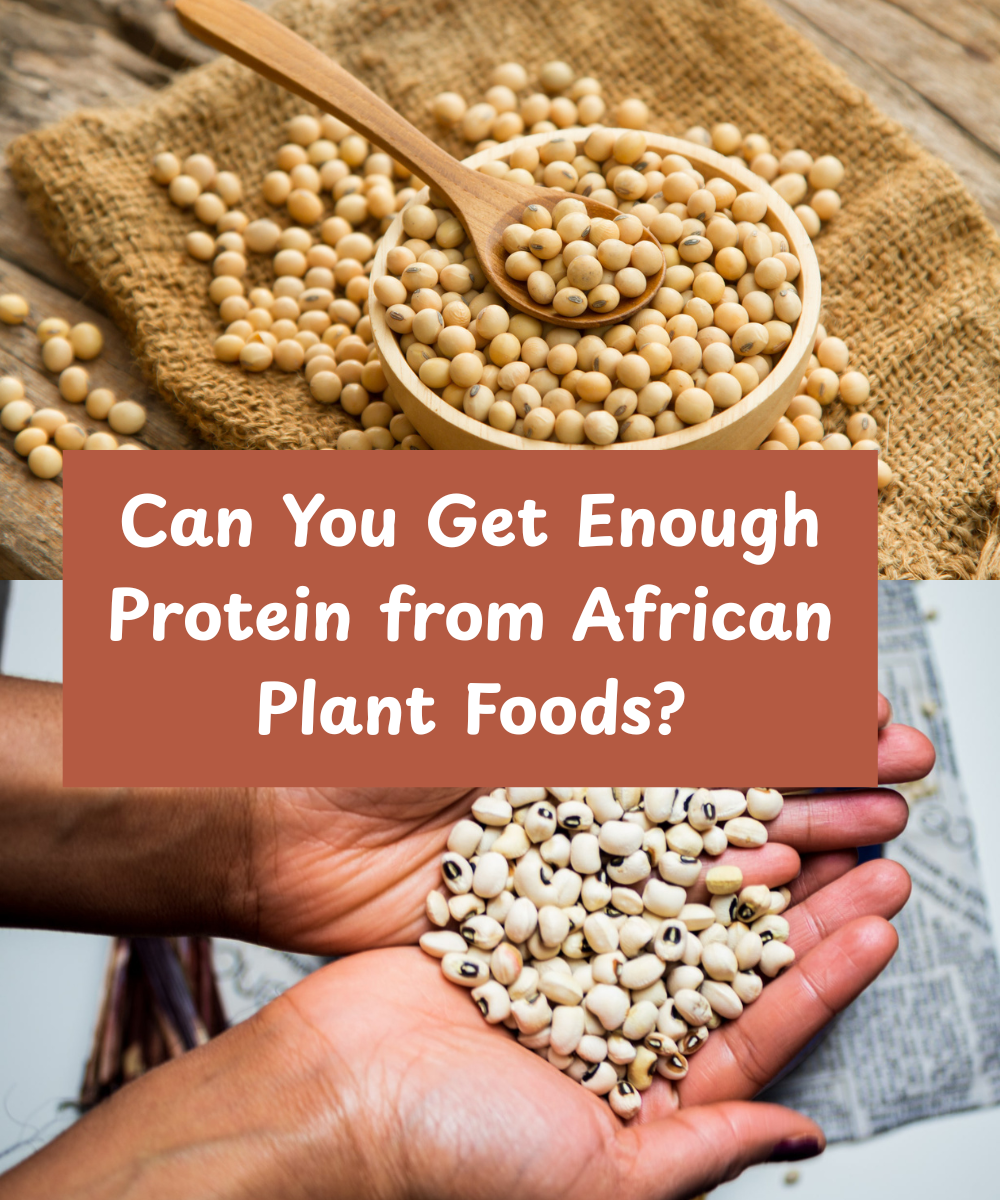
Most people think plant-based protein is not enough. At first, I thought the same. I didn’t understand this before. That’s why I struggled in the beginning.
Back then, I was trying to lose weight, but I wasn’t really paying attention to my plate.
Instead, I focused on doing more sport… or simply eating less.
However, my meals were not balanced. There wasn’t enough protein. There was no real structure.
👉 That’s when things started to change.
Not when I stopped eating African food. But when I finally started understanding it.
Is Plant-Based Protein Enough for Your Body?
Your body needs around 0.8g of protein per kg. So yes — you can absolutely reach that with African foods. In fact, it’s easier than most people think.
But it only works if your plate makes sense.
For example, you can build your meals with:
- niébé (black-eyed peas)
- peanuts or peanut sauce
- soy (tofu, soybeans)
These are not “extra” foods.
👉 They are foods we already eat.
The only difference is that we don’t always recognize their value.
Over time, this is exactly how I started eating better —without cutting out the foods I grew up with.
If you want to understand how African food can already support your health,
you can read this here:
👉 Is African Food Healthy?
Is Plant-Based Protein as Good as Animal Protein?
This is where things often get confusing. Yes, animal protein is considered “complete”.
However, that does not mean plant protein is not enough.
👉🏾It simply works differently. And actually, African food has always handled this naturally.
For example:
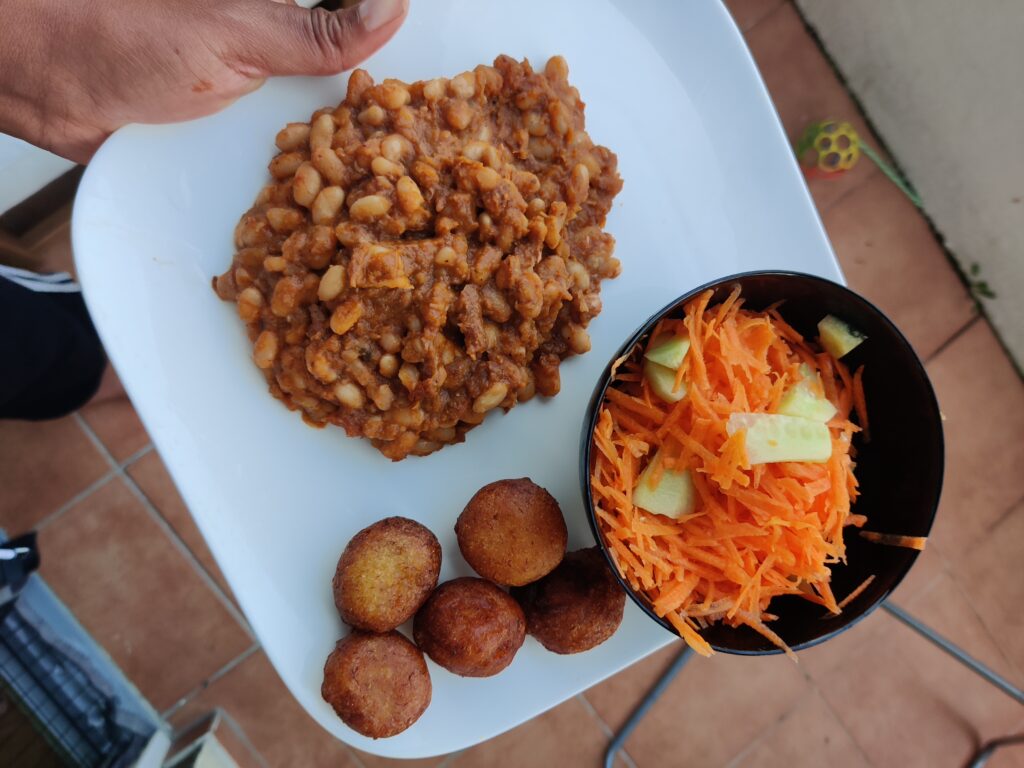
- rice + beans
- Rice + groundnuts + veggies
- sorghum + legumes
These combinations already provide complementary proteins.
So instead of overthinking amino acids, No calculations. No stress.
You don’t need perfection. You just need balance.
Is Plant-Based Protein Safe?
Let’s be honest.
There is a lot of fear around plant-based foods online.
Some say:
- “Soy is bad”
- “Anti-nutrients are dangerous.”
- “You will have deficiencies.”
However, most of these concerns are exaggerated.
Because context matters.
We don’t eat these foods raw.
We soak them.
We cook them.
We ferment them.
And these traditional methods already reduce most of the risks. So the real issue is not plant-based eating.
The real issue is unbalanced eating.
Too much starch.
Not enough variety.
And that problem exists — with or without meat.
African Plant Foods That Are Surprisingly High in Protein
When people think about protein, meat usually comes first.
However, African foods have always included strong plant-based protein sources.
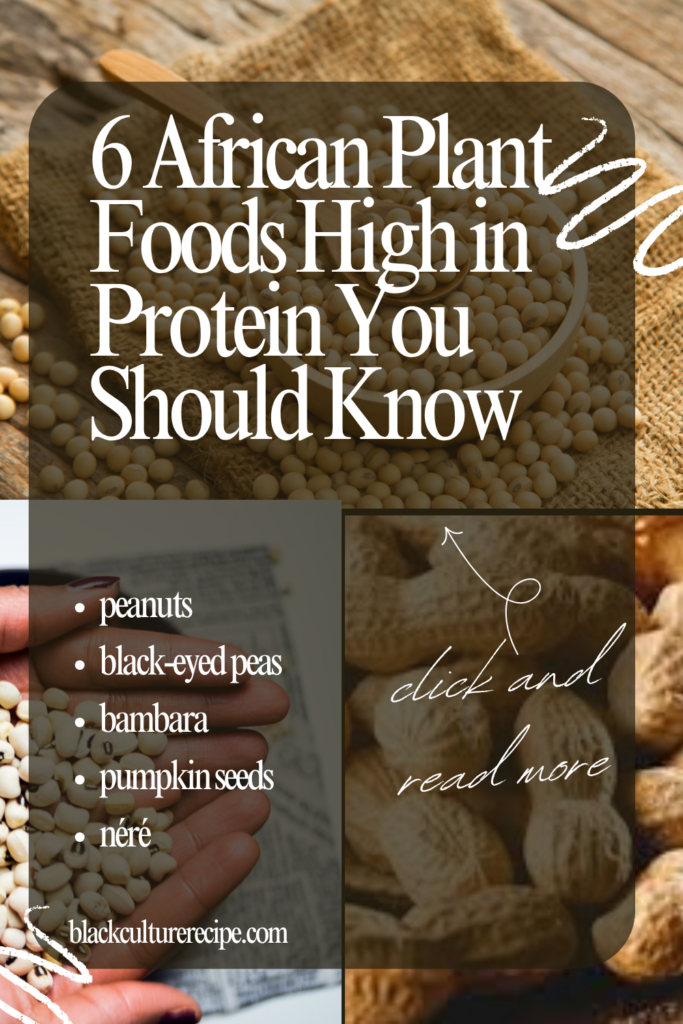
Here are some you should not underestimate:
- soybeans
- peanuts (groundnuts)
- niébé (black-eyed peas)
- bambara groundnuts
- pumpkin seeds
- néré
These are not “new” or “trendy” superfoods.
👉 They are traditional foods.
The difference today is that you now understand how to use them better.
If you want to explore more protein-rich African foods,
you can check this article:
👉🏾 20 African Foods High in Protein
How to Build a Balanced High-Protein African Plant-Based Plate
Now everything comes together. Because knowing the foods is not enough.
👉 You also need structure.
A balanced plate is actually very simple:
- one source of protein
- one source of carbohydrates
- vegetables
That’s it.
For example:
- ndole + plantain
- rice + peanut sauce + veggies
👉Just understanding your plate.
And that is exactly what balanced African-inspired eating is about.
If you want a simple visual and step-by-step guide,
you can read this here:
👉 How to Build a Balanced African-Inspired Plate
FAQ
Can you get enough protein from African plant-based foods?
Yes, you can get enough protein from African plant-based foods if your meals are balanced and include sources like beans, peanuts, and soy.
What are the best African plant-based protein sources?
Some of the best options include black-eyed peas, peanuts, soybeans, and bambara groundnuts.
Eating enough protein doesn’t mean changing everything. It doesn’t mean cutting out African food. And it definitely doesn’t mean following a strict diet.
👉 It means learning how to build a balanced African-inspired plate.
Because African food is not the problem.
It never was.
In most cases, it’s about simple adjustments:
- adding more protein-rich African foods
- combining plant-based protein sources correctly
- building more balanced meals
These small changes can make a real difference —
especially if your goal is to eat healthier or lose weight without giving up your culture.
If you found this helpful,
save this post on Pinterest so you can easily come back to it later.
This guide can help you build better meals using everyday African foods —
without overthinking or overcomplicating your diet.
For more practical tips, you can also read:
👉 How to Build a Balanced African-Inspired Plate
👉 20 African Foods High in Protein
If you found this helpful,
save this post on Pinterest so you can come back to it later when you need it.