What does healthy African food actually look like in real life?
Not a diet. Not extreme restrictions. Not cutting out rice or plantains. Just a balanced, realistic way to eat the foods you already love.
That’s what I want to talk about today.
Because I know how confusing healthy eating can feel — especially when most of the advice online doesn’t reflect African cuisine. When I first tried to lose weight, I focused almost entirely on exercise. I pushed myself in workouts, thinking that was the key.
But I barely paid attention to what was on my plate.
And honestly, part of the reason was fear. I believed eating healthy meant weighing every ingredient, counting every calorie, and eliminating carbohydrates. I thought it had to be complicated.
It doesn’t.
Healthy African food doesn’t mean replacing your traditional meals with salads and smoothies. It means understanding how to build a balanced plate using African staples — rice, plantain, stews, greens, beans, fish — in the right proportions.
When I started researching this topic, I realized there was very little practical guidance on how to eat African food in a healthier, more balanced way. So I decided to write the guide I wish I had found back then.
If you want to enjoy African-inspired meals while eating in a more balanced and nourishing way — without frustration and without cutting out your staple foods — this article is for you.
What Is Healthy African Food?
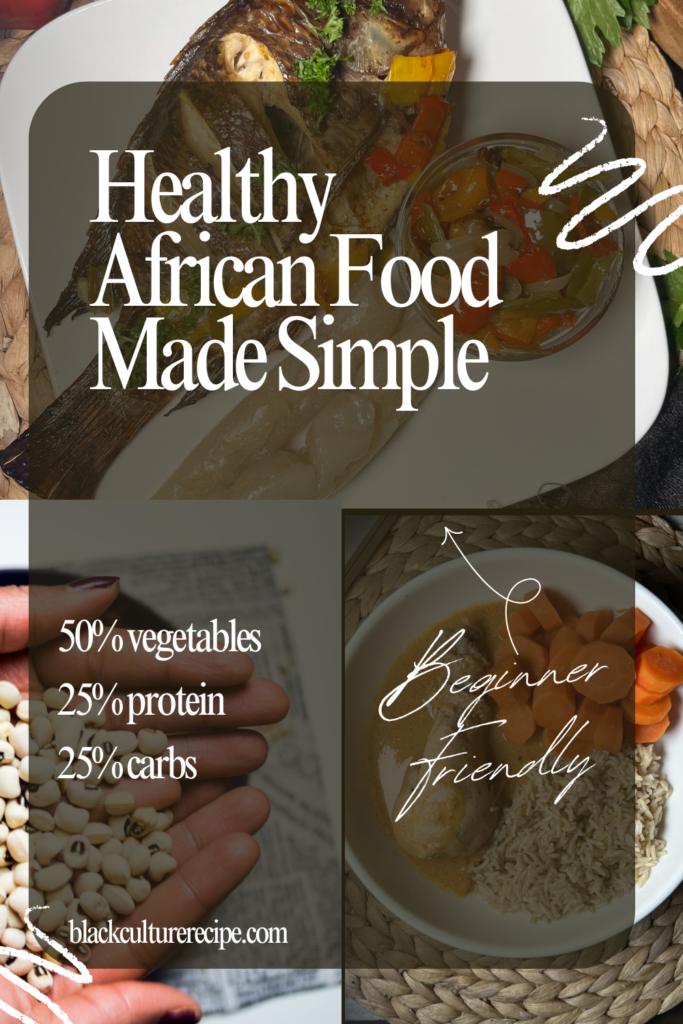
Healthy African food refers to traditional African meals prepared and structured in a balanced way — using whole, minimally processed ingredients and the right proportions of carbohydrates, proteins, vegetables, and healthy fats.
It does not mean eliminating staple foods like rice, plantain, yam, or fufu. Instead, it means understanding how to combine them properly and adjust portions to support energy, nourishment, and overall health.
In many cases, African cuisine already includes nutrient-dense ingredients such as leafy greens, legumes, fermented foods, grains, fish, and seeds. The key is balance — not restriction.
Understanding the 4 Core Food Groups in Healthy African Food
The first step toward building a balanced plate is simple: you need to recognize what’s actually on your plate.
Before changing portions or worrying about calories, it’s important to understand which food group each ingredient belongs to. That’s where I personally started — and it made everything much clearer.
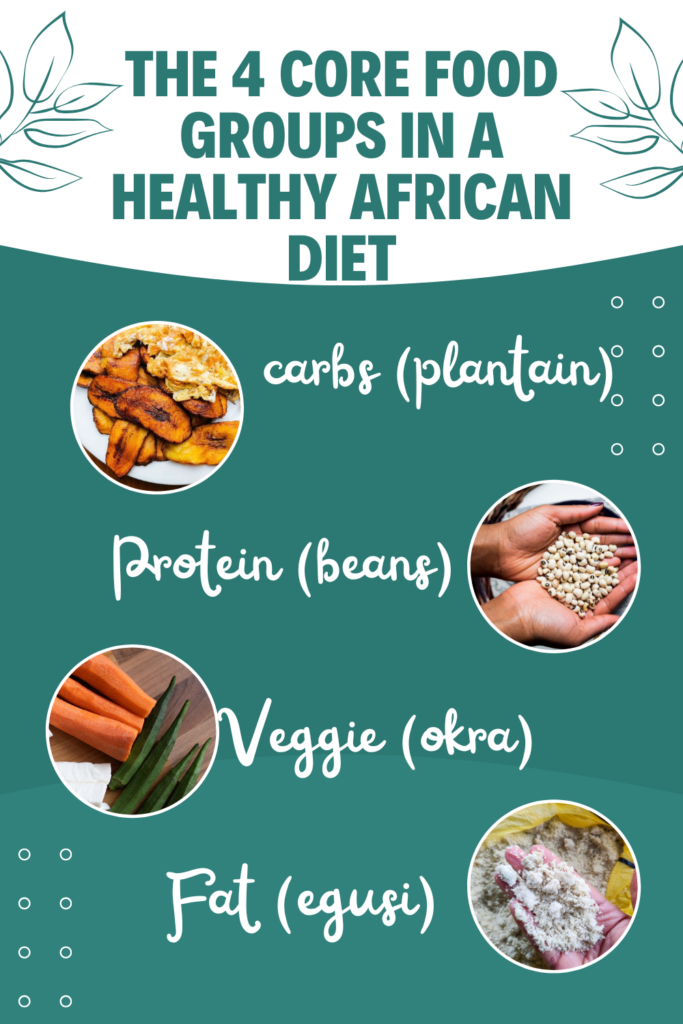
In most African meals, there are four main food groups: carbohydrates, proteins, vegetables, and healthy fats.
Let’s break them down.
🟡 Carbohydrates (Your Main Energy Source)
Carbohydrates provide energy and often make up the largest portion of traditional African meals.
In African cuisine, they usually come from two main categories: tubers and grains.
Tubers:
- Plantain (boiled, fried, roasted, pounded)
- Cassava (fufu, gari, attiéké, fermented couscous)
- Yam (boiled, pounded, fried)
- Taro
- Cocoyam
- Sweet potato
- White potato
Plantain, for example, becomes sweeter as it ripens. Cassava can be transformed into many traditional staples. These foods are deeply rooted in African cuisine.
Grains:
- Rice (widely consumed across West Africa)
- Maize (used for porridge, couscous, tô, akassa)
- Millet
- Sorghum (often confused with millet, but different — contains about 11g of protein per 100g)
- Fonio (ancient African grain)
- Wheat (bread, fried dough, pastries)
At this point, you may already notice something important: many African meals are structured around a carbohydrate base (the staple), accompanied by a sauce and a smaller portion of protein.
And that’s not wrong — it just needs balance.
🔵African Protein (Structure and Satiety)
Protein helps build and repair the body. It also plays a key role in satiety — meaning it helps you feel full longer.
There are two main types in African cuisine:
Animal protein:
- Chicken
- Fish
- Beef
- Eggs
Plant-based protein (legumes):
- Beans
- Black-eyed peas (niébé)
- Soybeans
Plant based protein also contain carbohydrates, but they are primarily valued for their protein content and fiber.
🟢 Vegetables and Fruits (Fiber and Micronutrients)
Vegetables are often present in African cooking — especially leafy greens — but the actual portion per person is sometimes smaller than we realize.
Common examples include:
- Bitterleaf (ndolé)
- Cassava leaves
- Sweet potato leaves
- Amaranth greens
- Baobab leaves
- Okra
- Cabbage
- Zucchini
- Green beans
Fruits such as baobab, soursop, dates, and guava also contribute important nutrients.
Vegetables are essential because they provide fiber, vitamins, and support overall digestion.
🟠 Healthy Fats (Essential, Not the Enemy)
Fats are often misunderstood. Many people assume dietary fat automatically leads to weight gain — but that’s not accurate.
Healthy fats are essential for hormone function, nutrient absorption, and long-lasting energy.
In African cuisine, common sources include:
- Red palm oil (in its natural, unprocessed form)
- Peanuts (about 45% fat and 27% protein)
- Sesame seeds (around 50% fat)
- African Pumpkin seeds (around 48% fat, 27% protein)
The goal is not to eliminate fats — but to use them in appropriate amounts.
In Summary
No food group is the enemy. For the body to function properly, it needs carbohydrates, proteins, fats, and fiber — in balanced proportions.
Healthy African food is not about removing traditional staples. It’s about understanding them — and combining them wisely.
How to Build a Balanced Plate with Healthy African Food (The 50/25/25 Method)
So what does healthy African food actually look like on your plate?
A balanced African-inspired plate does not require eliminating traditional staples. Instead, it’s about structuring them properly.
A simple and practical way to build a balanced plate is the 50/25/25 method:
- 50% vegetables
- 25% protein
- 25% carbohydrates (rice, plantain, yam, cassava, fufu, millet)
In other words, half of your plate should be vegetables, while the other half is divided between protein and complex carbohydrates.
In simple terms: healthy African food becomes balanced when vegetables take up half the plate, and protein and carbohydrates share the rest.
Now, in real life, this can feel challenging at first.
If dividing your plate into exact percentages feels too technical, start with something easier: the one-third rule. Fill your plate with roughly equal portions of vegetables, protein, and carbohydrates. This is already a strong step toward balanced eating.
I’ve noticed that in many African households, we don’t always have the habit of adding a real portion of vegetables — or even serving a small bowl of salad before heavier meals.
Very often, the staple (fufu, rice, couscous, plantain) takes up most of the plate, while the sauce contains vegetables but in smaller amounts per person. When you look closely, the actual vegetable intake may be much lower than we think.
Healthy African food doesn’t mean replacing traditional meals with Western-style salads. It means adjusting proportions within the meals we already know and love.
Balance, not restriction, is the foundation.
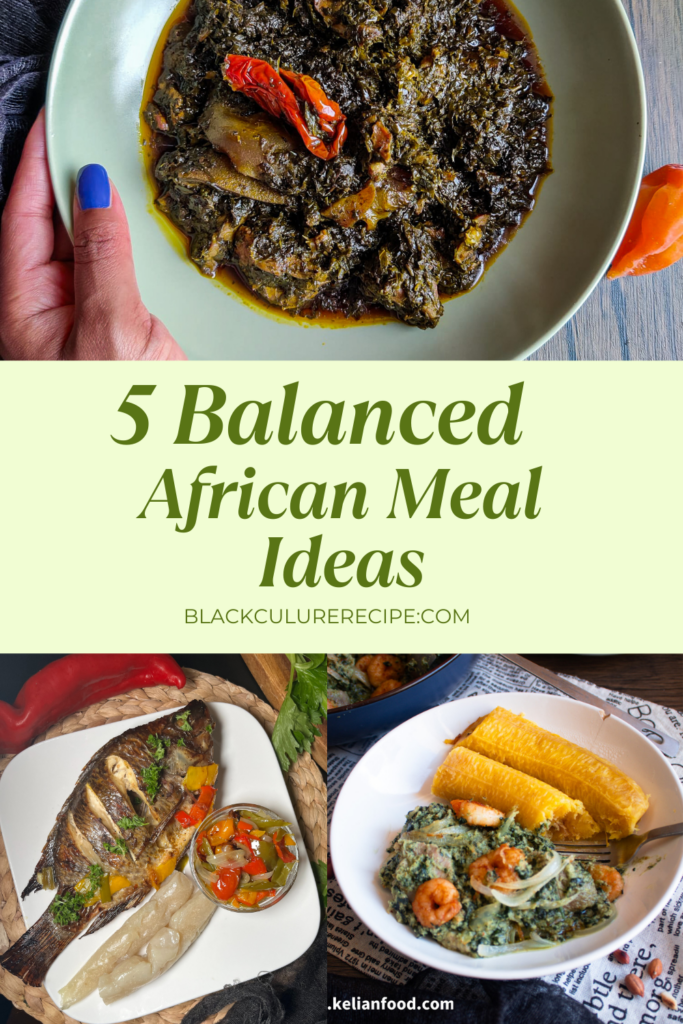
5 Examples of Healthy and Balanced African Meals
Understanding healthy African food becomes much easier when you see practical examples.
Here are five traditional African-inspired meals that can naturally support a balanced plate — with simple portion adjustments when needed.
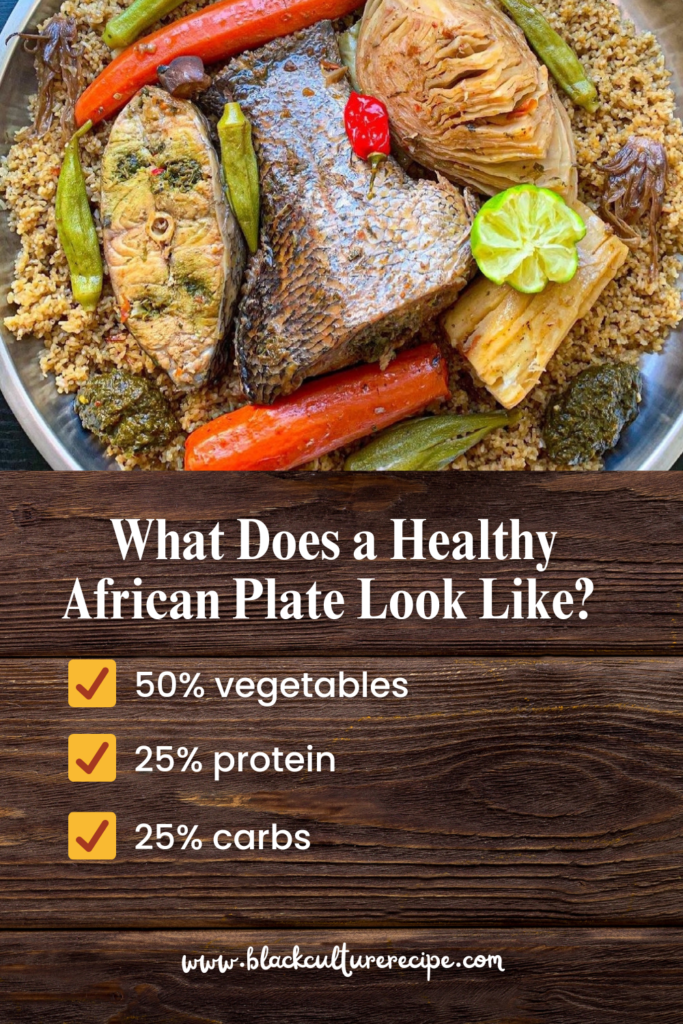
1️⃣ Thieboudienne (Senegalese Rice and Fish)
This popular West African dish already includes rice, fish, and a variety of vegetables.
To keep it balanced:
- Fill half your plate with the cooked vegetables.
- Keep rice to about one quarter of the plate.
- Choose grilled or lightly cooked fish instead of heavily fried options when possible.
This is a great example of healthy African food that simply needs mindful portions.
2️⃣ Okra Soup with Fufu
Okra soup is rich in fiber and often includes fish or meat for protein.
To balance the plate:
- Keep the fufu portion moderate.
- Make sure the soup contains a generous amount of vegetables.
- Avoid excessive oil.
This meal can be very nourishing when portions are adjusted properly.
3️⃣ Grilled Fish with Sautéed Greens and Plantain
This combination is naturally well-balanced:
- Protein from fish
- Fiber and micronutrients from leafy greens
- Carbohydrates from plantain
The key is to steam or roast the plantain instead of deep-frying it.
4️⃣ Bean Stew with Millet or Brown Rice
Beans provide plant-based protein and fiber.
To make it balanced:
- Pair with whole grains like millet or brown rice.
- Add a side of fresh vegetables or salad.
- Control added oils.
This is a strong example of plant-forward healthy African eating.
5️⃣ Ndolé with Controlled Portions
Ndolé contains leafy greens, peanuts, and protein (often beef or shrimp).
To keep it balanced:
- Increase the vegetable-to-meat ratio.
- Keep the carbohydrate portion moderate.
- Be mindful of oil quantity.
Ndolé can absolutely fit into a healthy African food pattern when portions are adjusted.
The Key Takeaway
Most traditional African meals are not “unhealthy” by nature.
In fact, many already contain the core components of a balanced plate. The difference lies in portion size, cooking methods, and the balance between staples and vegetables.
Healthy African food is not about replacing cultural dishes — it’s about adjusting them thoughtfully.
How Healthy African Food Can Support Weight Loss and Energy Balance
Many people assume that African food automatically leads to weight gain. But in reality, healthy African food can absolutely support weight loss — when it is structured and portioned properly.
Weight loss is not about removing cultural staples. It’s about balance.
🔹 Satiety: Why Balance Helps You Eat Less Naturally
Here’s what truly matters:
- Protein slows digestion.
- Fiber increases fullness.
- Healthy fats help stabilize energy.
- Carbohydrates provide fuel.
When these nutrients are present in the right proportions, you stay full longer.
And when you stay full longer, you snack less.
That’s why a balanced African plate can support weight loss naturally — not because it eliminates foods, but because it improves satiety and portion control.
Sustainable weight loss is driven largely by nutrition, supported by physical activity — not the other way around.
🔹 Blood Sugar Stability and Fewer Cravings
Blood sugar refers to the amount of glucose circulating in your bloodstream.
When a meal consists mostly of refined carbohydrates — such as large portions of white rice, white bread, or fufu eaten alone — it can cause a rapid rise in blood sugar, followed by a noticeable drop in energy.
That energy crash often leads to cravings, fatigue, and unnecessary snacking.
By adding protein and vegetables to your plate, blood sugar levels rise more gradually and remain more stable.
Stable energy means fewer cravings and better appetite control.
(If you’re curious about this mechanism, I explain it further in my article on post-meal fatigue.)
🔹 The Common Mistake: Removing Carbs Completely
One of the most common mistakes people make when trying to lose weight is eliminating carbohydrates entirely.
This may work temporarily, but it is rarely sustainable — especially in cultures where staples like rice, yam, plantain, and fufu are central to daily meals.
Healthy African food does not require eliminating staples. It requires adjusting portions.
❌ Removing entire food groups
✅ Balancing proportions
Long-term results come from consistency — not restriction.
Why This Matters
Healthy African food supports weight loss not by changing your culture, but by changing how your plate is structured.
Balance creates sustainability.
Sustainability creates results.
Common Mistakes When Trying to Eat Healthy African Food
When people try to make African meals “healthier,” they often make drastic changes that aren’t necessary — and sometimes not sustainable.
Here are some of the most common mistakes.
❌ 1. Removing Carbohydrates Completely
Rice, yams, plantains, fufu — these are staple foods in many African cultures.
Eliminating them may lead to short-term weight loss, but it is rarely sustainable. Carbohydrates provide energy, and when eaten in balanced portions, they can absolutely be part of healthy African food.
The goal is moderation, not elimination.
❌ 2. Using Excessive Oil
Traditional dishes can become calorie-dense when large amounts of oil are used.
Healthy African food does not require removing oils completely — but being mindful of portion sizes makes a significant difference.
Small adjustments in cooking methods can dramatically improve balance.
❌ 3. Not Eating Enough Vegetables
Many African sauces contain vegetables, but the actual portion per person may be small.
A balanced African plate prioritizes vegetables — ideally filling half of the plate.
Increasing leafy greens, okra, cabbage, and other fiber-rich foods improves both satiety and nutrient intake.
❌ 4. Oversized Staple Portions (Large Fufu or Rice Servings)
The staple often dominates the plate.
When the carbohydrate portion becomes too large compared to protein and vegetables, balance is lost.
Healthy African food is not about removing fufu — it’s about adjusting the portion size so it complements the rest of the meal.
The Bottom Line
Healthy African eating is not about changing your culture.
It’s about adjusting proportions, improving balance, and making small, sustainable shifts.
FAQ
Frequently Asked Questions About Healthy African Food
What is the healthiest African food?
There isn’t one single “healthiest” African food. Many traditional African ingredients — such as leafy greens, beans, millet, fish, and fermented foods — are nutrient-dense. What matters most is how the meal is structured and portioned.
Is African food good for weight loss?
Yes, African food can support weight loss when meals are balanced and portions are controlled. A plate that includes vegetables, protein, and moderate amounts of carbohydrates helps improve satiety and reduce overeating.
What is a balanced African meal?
A balanced African meal typically includes:
- Half the plate of vegetables
- One-quarter protein
- One-quarter carbohydrates
This structure supports energy, fullness, and nutritional balance.
Are plantains unhealthy?
No. Plantains are a natural source of carbohydrates and fiber. They are not unhealthy by default. The cooking method and portion size matter more than the ingredient itself.
Boiled, roasted, or baked plantains are generally lighter options than deep-fried versions.